
This week, Zoe, Katelyn, Libby and I took on making lunch for 200 farmers at the farmers market, along with some grad students, Laurie Beth, and Michael. The menu was butternut squash with bread rolls, and as per usual almost all of the food was locally sourced from Laurie Beth and Michael’s garden. As the workers trickled in, we were split up into two groups; bread roll people and squash people. Because the squash required more cooking expertise, we were on the duty of doing the bread rolls.
Michael took us over to the side away from the sinks where he had a dough that was the size of one of the compost buckets. He then showed us how to not knead the dough, but actually fold it into itself to get a really nice, dense crust. However, because he’s a complete pro he was doing it insanely fast and made us all look stupid when we were doing half the speed he was to finish a roll.
He made the dough earlier, and by the time he had finished letting it rise, it had doubled in size. Because of the massive amount of air in the dough already, he told us to not knead the dough that much as it can incorporate too much air into the rolls. We used the nifty bread slicer and cut out what we thought were 50-gram pieces of dough to fold, and kept doing that assembly-line style until we were out of dough!
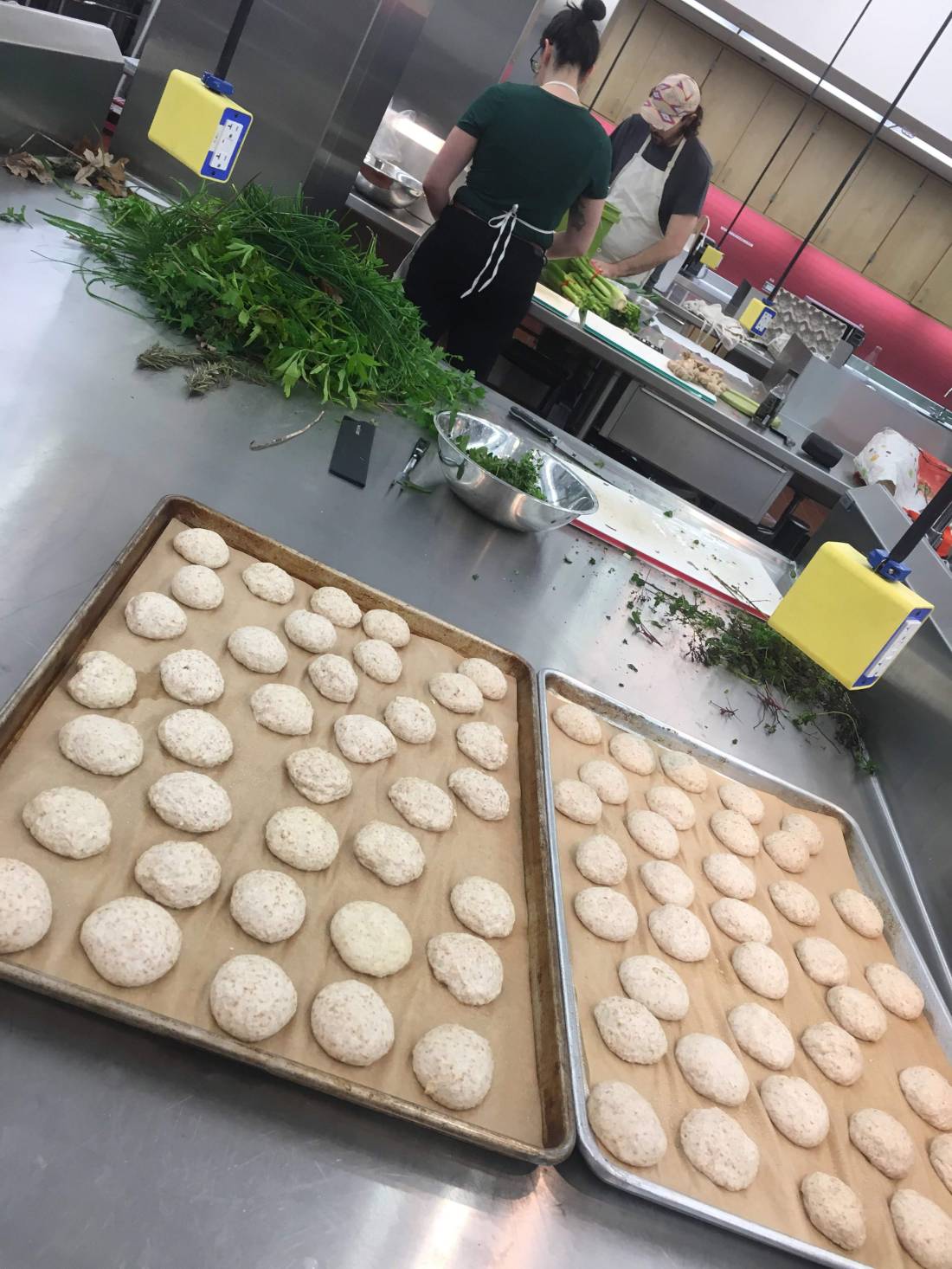
When we were folding in the dough, it would gradually become really sticky and usually, you use flour to take that stickiness away, but Michael told us to use as little flour as possible to keep the integrity of the dough after it had been cooked. We used as little as possible (or substitute flour with olive oil) and ended up filling 5 trays worth of uncooked rolls!
Michael also had the stroke of brilliance to try two ways of cooking the rolls, which made a surprising difference in the flavor of the rolls. We ended up going with the classic convection oven because it gave of the best “homey” flavor.
As you can see in the background in the picture above, while we were making the rolls the graduate students were preparing the soup. Although I don’t know as much about the soup process as I do the bread roll process, it smelled heavenly. We would routinely walk past these massive soup pots boiling vegetables to make a vegetable broth for the butternut squash soup.
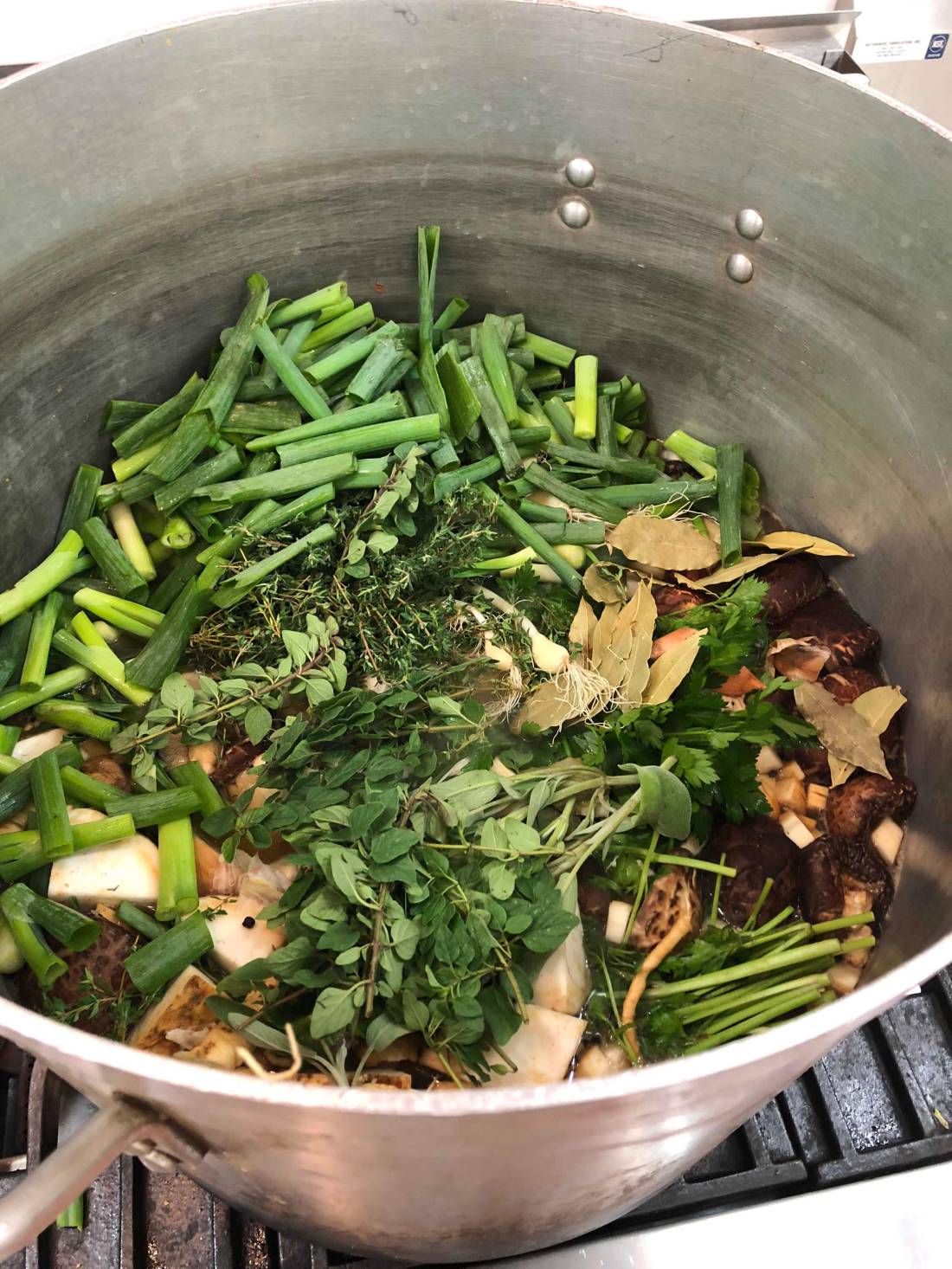
They spend maybe a whole hour cutting up all of the vegetables and cutting the squashes in half to put in the oven, and by the time we were done with the rolls, the squashes were in the oven. When the squashes were done cooking, we took the squash halves and took out the seeds and stringy fibrous insides, and then scooped the squash out of the skin. They were really hot though, and removing squash from the skin is hard to do with just a spoon and a few burned fingers.
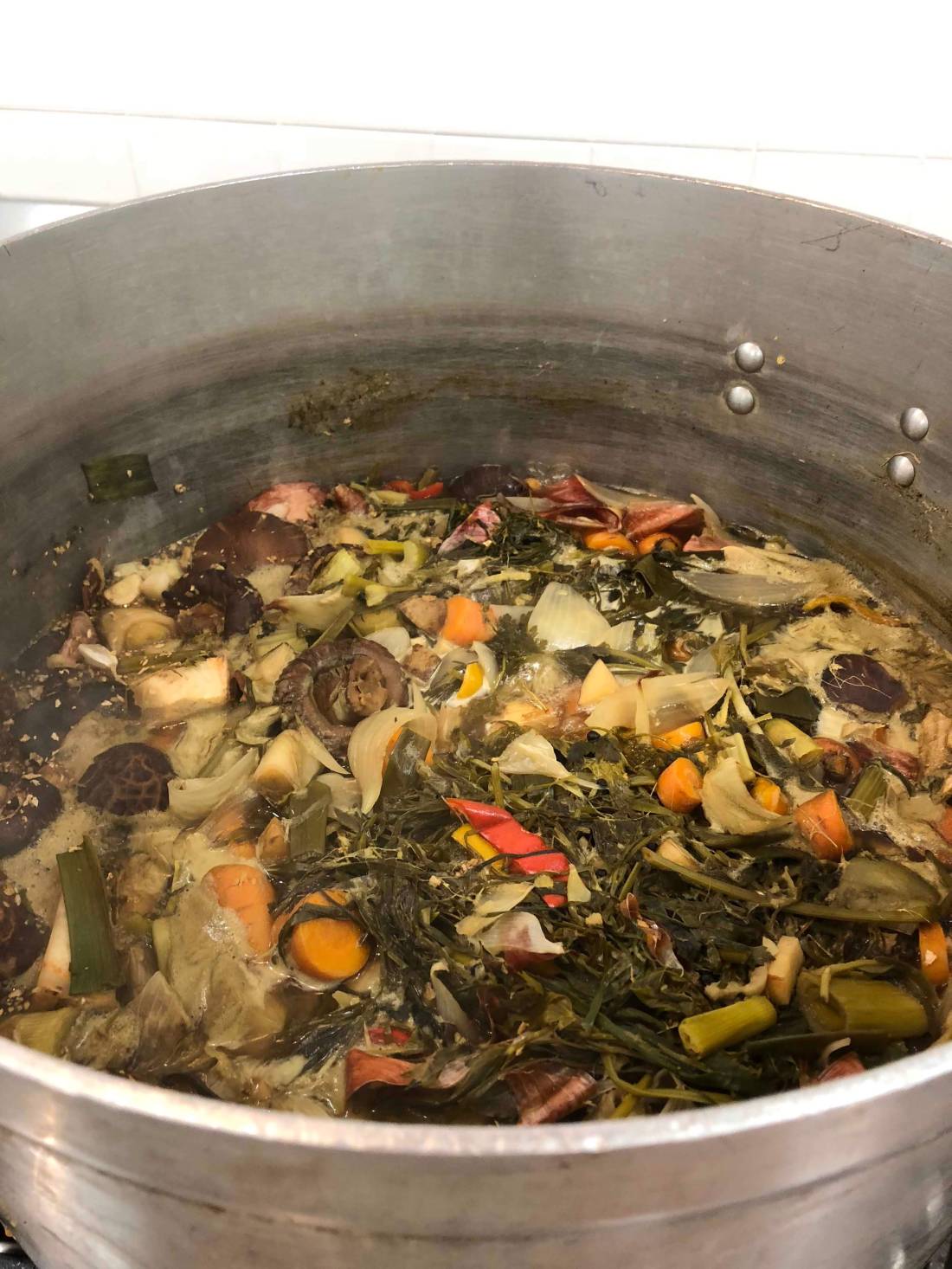
When the broth looked like this, it was ready to be strained. A graduate student and I strained all the broth out from the vegetables and put the leftovers in the compost buckets. Laurie Beth and another graduate student then combined the broth with the squash and used what must have been a 3-foot long immersion blender to make the soup!
Making the bread rolls was really relaxing, it sunk into a repetitive motion of folding the dough and I overall enjoyed the experience!
-Lars
 Lars Dreams of Food