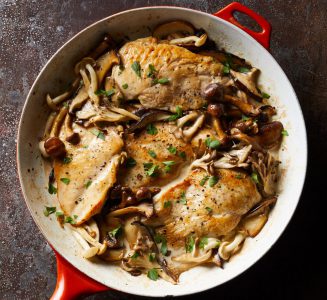

When walking down the aisle of almost any grocery store or market, there will be a huge significance put on labeling the foods as not genetically modified, or even better; organic. Even though those two terms mean different things, they both have the same connotation of meaning that they will be better for you than the foods that say they’ve been treated with pesticides or have been genetically modified.
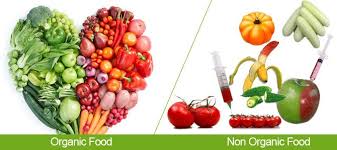
Being able to label a food organic has been one of the holy grails of farming; farmers get significantly more money for them as they’re harder to farm, and they’re in higher demand from consumers as per the connotation of being healthier. However, the main concern of nonorganic food is that nonorganic farmers are allowed to both use pesticides and to genetically modify the crops. This concern is, in my opinion, mislead as GMO’s have been proven to be safe for the public and have also shown to actually help the environment.
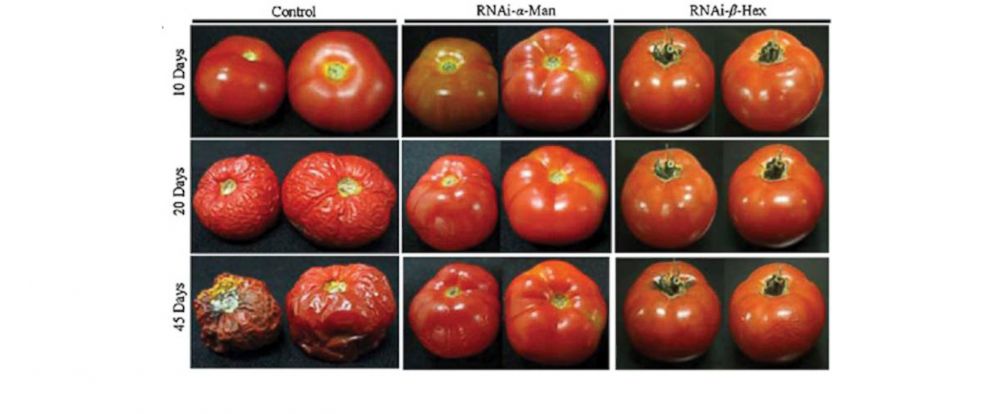
Above is a picture of the results of a research study done on genetically modified tomatoes, of which the genes were altered to allow the tomatoes to have a longer shelf life. This is huge for us consumers as it allows us to buy fruit and vegetables that will survive longer than 2 weeks. As you can tell, sometime during 20 days and 10 days after being picked off the vine the control tomatoes (tomatoes that weren’t genetically modified) had already started to rot and look pretty disgusting. Comparatively, the genetically modified tomatoes even after 45 days look almost new. This just shows how much GMO’s can change food.
Now, although you can see that GMO’s help make food both more edible and more resistant to the environment, it easily sounds too good to be true. It also raises the questions of if it’s truly safe to eat, or if it will deteriorate the environment faster than organically (“normally”) grown food. Over the past few years, it has been proven that the answers to those questions is no.
GMO’s alter the plants at a genetic level, never as a chemical placed on the original plant. Although in the current day and age we do this modification in a laboratory with proper scientific instruments, farmers have been doing a similar process for dozens of years previously. They would take the seeds of a crop that does particularly well in the conditions they’re farming in and replant them specifically so they would grow again next year, all the while removing the plants that died. Farmers were essentially moving natural selection along through this process, and allowing for the “strong” genes to live on while removing the “weak” ones.
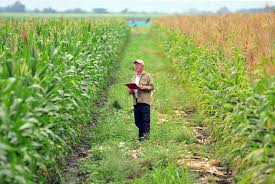
Now, plants will have larger yields per acre, which in turn helps feed the growing population of the world. We will also be able to conserve more space for “wild land”, which allows for greater biodiversity in the world. Both of those are hugely important for this changing world, and although GMO’s are not perfect, in my opinion those benefits far outweigh the drawbacks.
Therefore, the belief that organic food is the only healthy way to eat is shrouded by the halo effect, that it’s pure with no negatives. That’s incorrect; organic farming is difficult and costly. Because of the strict requirements placed on it by the Department of Agriculture, farmers can have a difficult time keeping their crops alive and productive. For example, most organic farmers have to spend many hours a week purely pulling weeds up to give their crops the ability to grow, whereas with GMO crops certain genes can make it difficult or impossible for a weed to grow near them.
Now, the big difference is pesticides. Certain pesticides have been proven to negatively affect humans, but they can be really negative in affecting the environment and the animals living in it. An excellent example of this is the product DDT, which was incredibly widespread in the United States in the 1950’s. It worked as an insecticide, but adversely affect many birds as it weakened the shells of their eggs. The eggs would crack prematurely, and therefore kill the developing birds. Because of this, the Bald Eagle (national animal of the United Sates) almost went extinct.
I am arguing that the push for organic food as our saving grace is mislead, and that although pesticides are negative, genetically modifying crops is not. Growing organic food in a personal garden or on a small scale is not the issue, but large scale organic farming is not what will save the human race.
 Lars Dreams of Food
This was super interesting to read, you bring up a lot of great points. Pesticides are a huge problem and it is not practical for everyone to eat organically. I like your argument.
LikeLike
I definitely think you make a good point that food labels in grocery stores can be misleading and often people focus too heavily on them but I am also of the opinion that messing with food probably just isn’t the best. Even if it might be more effective and efficient I just think that foods in their simplest form are the way they were intended to be.
LikeLike
I totally agree with your blog. Reading this I was glad to see that you weren’t one of those people who blindly bash on GMOS.
LikeLike